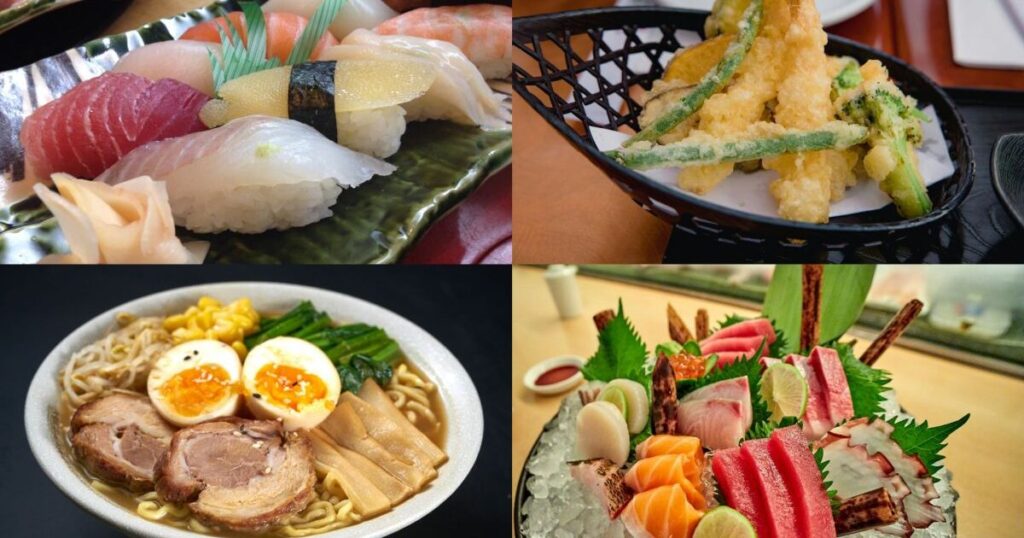
Japan is famous for sushi, ramen, and elegant multi-course meals, but some of the country’s most memorable flavors are found in far more casual places. Walk through a lively market, explore a festival, or stroll along a busy shopping street, and you will quickly discover one of the most exciting parts of Japanese food culture: street food.
For first-time visitors, trying street food in Japan is one of the easiest and most enjoyable ways to experience local flavors. It is affordable, freshly prepared, and often tied to the atmosphere of the place itself. From crispy takoyaki in Osaka to sweet taiyaki near temples and train stations, Japanese street food offers a delicious mix of tradition, comfort, and regional character.
One of the best things about Japanese street food is its variety. Some snacks are strongly connected to certain cities, while others can be found across the country at festivals, markets, temple approaches, and food halls. You can enjoy a quick bite between sightseeing stops or turn an entire evening into a casual food adventure.
In this guide, you will discover the best street foods in Japan you should not miss, what they taste like, where to find them, and a few useful etiquette tips before you start eating. Whether you are planning your first Japan trip or building a food bucket list, this article will help you decide which must-try foods in Japan deserve a spot on your itinerary.
Why Street Food in Japan Is Worth Trying
Street food in Japan may look a little different from what you see in other countries. Instead of long rows of carts on every corner, Japanese street food is often found at festival stalls, traditional markets, shopping arcades, temple streets, yatai stalls, and specialty takeaway shops.
What makes it special is the attention to detail. Even a simple snack is usually prepared with care. Batter is mixed properly, sauces are balanced, toppings are added thoughtfully, and presentation still matters. Japanese street food may be quick and casual, but it reflects the same food culture that makes Japan such a rewarding destination for travelers.
There is also a strong seasonal and regional side to it. Summer festivals are known for classics like yakisoba, grilled corn, and karaage, while famous sightseeing areas often have their own local specialties. That means trying street food is not only about eating well. It is also a great way to experience local culture in a more direct and memorable way.
Here is why travelers love it:
- It is easy for first-time visitors to enjoy
- Many items are affordable
- You can try several dishes in one outing
- It introduces you to regional specialties
- It adds fun and spontaneity to sightseeing
If you love food and travel, sampling the best street foods in Japan should absolutely be part of your trip.
Best Street Foods in Japan at a Glance
| Street Food | What It Is | Best Known For | Flavor Profile |
|---|---|---|---|
| Takoyaki | Octopus balls topped with sauce and mayonnaise | Osaka | Savory, creamy, slightly sweet |
| Yakitori | Grilled chicken skewers | Nationwide | Smoky, salty, umami-rich |
| Yakisoba | Stir-fried noodles with sauce | Festivals nationwide | Savory, saucy, satisfying |
| Okonomiyaki | Japanese savory pancake | Osaka, Hiroshima | Rich, hearty, flavorful |
| Taiyaki | Fish-shaped cake with sweet filling | Nationwide | Sweet, warm, comforting |
| Karaage | Japanese fried chicken | Nationwide | Crispy, juicy, garlicky |
| Ikayaki | Grilled squid | Coastal areas, festivals | Smoky, chewy, savory |
| Jaga Butter | Hot potato with butter | Hokkaido, festivals | Simple, rich, comforting |
| Senbei | Japanese rice crackers | Temple streets, markets | Crunchy, salty or slightly sweet |
| Imagawayaki / Obanyaki | Round filled cake cooked in a mold | Nationwide | Sweet, soft, filling |
| Dango | Rice dumplings on a skewer | Temple towns, old streets | Chewy, mildly sweet |
| Yaki Tomorokoshi | Grilled corn brushed with soy sauce | Festivals | Sweet, smoky, savory |
1. Takoyaki
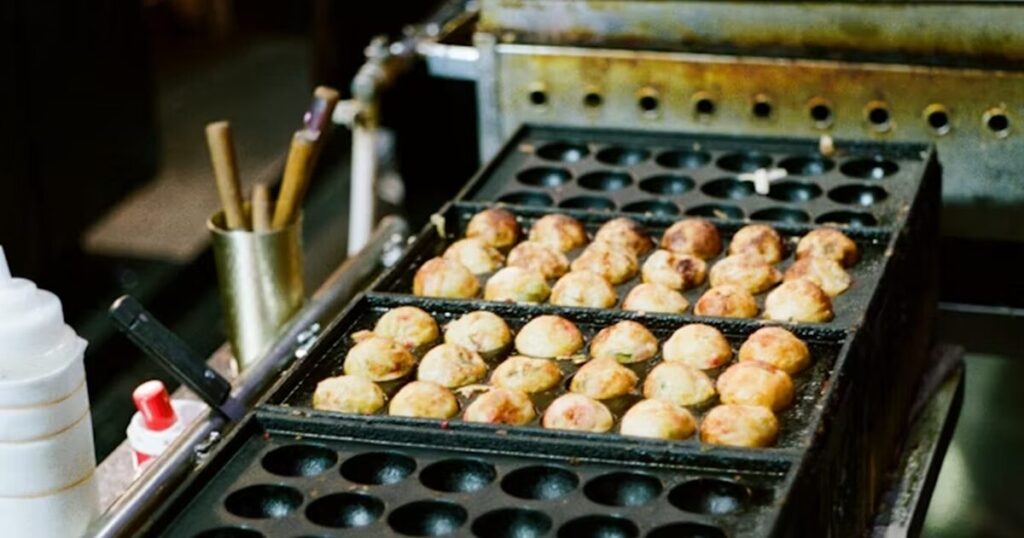
If there is one street food that many travelers associate with Japan right away, it is takoyaki. These golden, ball-shaped snacks are made from a light batter filled with small pieces of octopus, then cooked in a special molded pan until lightly crisp on the outside and soft in the center.
Takoyaki is usually topped with takoyaki sauce, Japanese mayonnaise, bonito flakes, and aonori (green seaweed powder). The result is rich, savory, creamy, and slightly sweet.
It is especially famous in Osaka, where it is considered one of the city’s signature foods. Areas like Dotonbori are packed with popular takoyaki shops, but you can also find it in many other cities at festivals, food courts, and casual takeaway stands.
Why try it:
It is one of the most iconic must-try foods in Japan and delivers a flavor and texture combination that feels uniquely Japanese.
Tip:
Fresh takoyaki is extremely hot inside, so take a small bite first and let it cool slightly.
2. Yakitori
Yakitori means grilled chicken skewers, but that simple description barely does it justice. Pieces of chicken are skewered and grilled over charcoal, then seasoned with either shio (salt) or tare (a sweet-savory soy-based glaze).
Different cuts offer different textures and flavors. Some skewers use tender thigh meat, while others feature chicken skin, meatballs, liver, or scallions between pieces of meat. If you are trying yakitori for the first time, chicken thigh with tare is usually the safest and most crowd-pleasing choice.
Yakitori is popular in izakaya, but it also works perfectly as a casual snack from markets, food alleys, and takeaway stalls. The smoky aroma alone is enough to draw people in.
Why try it:
It is simple, flavorful, easy to eat, and one of the most approachable examples of street food in Japan.
Tip:
Order both salt and sauce versions so you can compare the flavors.
3. Yakisoba
No Japanese festival feels complete without yakisoba. These stir-fried noodles are cooked on a flat grill with vegetables, slices of meat, and a sweet-savory sauce that gives them their classic festival flavor.
Yakisoba is often topped with pickled ginger, aonori, or bonito flakes. It is a staple at summer festivals, local fairs, and temple events throughout Japan.
Good yakisoba is deeply satisfying. The noodles are tender and slightly chewy, and the sauce coats everything with a rich, savory flavor that feels both comforting and familiar.
Why try it:
It is a classic Japanese festival dish and a great option when you want something more filling than a light snack.
Tip:
It tastes best straight off the grill while it is still hot.
4. Okonomiyaki
Often described as a Japanese savory pancake, okonomiyaki is made with a flour-based batter, cabbage, and ingredients such as pork, seafood, cheese, or mochi. It is cooked on a griddle and finished with savory sauce, mayonnaise, seaweed, and bonito flakes.
There are famous regional variations, especially Osaka-style and Hiroshima-style. Osaka-style mixes the ingredients into the batter, while Hiroshima-style layers them and often includes noodles. Both are delicious, though Osaka-style is more commonly found in easy-to-eat casual settings.
Because it is made fresh and feels more substantial than many other street snacks, okonomiyaki is ideal when you want something closer to a light meal.
Why try it:
It is rich, customizable, and one of Japan’s most beloved comfort foods.
Tip:
Some stalls serve it in a tray, making it easier to enjoy nearby rather than while walking.
5. Taiyaki
After several savory dishes, it is time for something sweet. Taiyaki is a fish-shaped cake with a lightly crisp exterior and a warm filling inside. The classic filling is anko (sweet red bean paste), but many shops also offer custard, chocolate, matcha cream, or sweet potato.
Taiyaki is popular across Japan, especially in shopping streets, temple areas, and tourist neighborhoods. It may look cute, but it is much more than a photo-friendly snack. When freshly made, it is warm, fragrant, and genuinely satisfying.
The outer shell is similar to pancake or waffle batter, while the filling adds sweetness and softness. Even travelers who are unsure about red bean paste often end up loving it in taiyaki.
Why try it:
It is one of the most classic Japanese sweets and an easy favorite for first-time visitors.
Tip:
Try both the traditional red bean version and a custard-filled one if you can.
6. Karaage
Karaage, or Japanese fried chicken, is one of the most universally loved foods in Japan. The chicken is marinated, lightly coated, and fried until golden and crisp. Common seasonings include soy sauce, ginger, garlic, and sake, which give it a juicy, flavorful finish.
Although karaage is often sold in convenience stores and lunch shops, it is also a popular item at markets, festival stalls, and street food counters.
Compared with some other fried chicken styles, karaage usually has a lighter coating and more flavor in the meat itself. It is often served plain, with lemon, or in a paper cup for easy takeaway.
Why try it:
It is crispy, juicy, comforting, and very easy for first-time travelers to enjoy.
Tip:
Freshly fried karaage from a stall or specialty shop is usually much better than pre-packed versions.
7. Ikayaki
If you enjoy seafood, ikayaki is well worth trying. This Japanese street food usually refers to grilled squid, often brushed with a soy-based glaze and cooked until smoky and glossy.
At festivals and coastal markets, whole squid on a stick is one of the most recognizable sights. The texture is slightly chewy, which some travelers love and others need time to get used to, but the savory flavor is unmistakably satisfying.
Ikayaki is especially common in seaside destinations and summer festival settings, where the smell of grilled seafood fills the air.
Why try it:
It captures the atmosphere of Japanese festivals and offers a distinctly local seafood experience.
Tip:
This is best for travelers who already enjoy seafood and do not mind a firmer texture.
8. Jaga Butter
Jaga butter is a simple but underrated favorite: a hot potato served with butter, and sometimes extra toppings. It is especially associated with Hokkaido, a region famous for excellent potatoes and dairy products, though it also appears at festivals around Japan.
It may look plain at first, but when the potato is fluffy and steaming and the butter melts into every bite, it becomes an incredibly comforting snack, especially in cooler weather.
Because many Japanese street foods are fried or heavily sauced, jaga butter offers a nice change of pace. It is mild, filling, and easy for almost anyone to enjoy.
Why try it:
It is warm, satisfying comfort food and especially good in autumn and winter.
Tip:
The classic butter-only version is a great place to start, even if other toppings are available.
9. Senbei
Senbei are Japanese rice crackers, and while packaged versions are sold everywhere, freshly grilled senbei from a traditional stall is a completely different experience. They are often brushed with soy sauce and grilled until fragrant, giving them a smoky, crisp, and slightly chewy texture.
You will often see fresh senbei in historic districts, temple approaches, and old-fashioned shopping streets. Some are thin and crunchy, while others are thick and hearty.
For travelers who want something less oily, senbei is an excellent option. It also shows how simple ingredients can still create deep, satisfying flavor in Japanese food culture.
Why try it:
It feels traditional, local, and different from the richer festival foods many visitors expect.
Tip:
Freshly grilled senbei is far more aromatic and enjoyable than supermarket versions.
10. Imagawayaki / Obanyaki
Known by different names depending on the region, imagawayaki or obanyaki is a thick, round cake cooked in a mold and filled with something sweet. Red bean paste is the classic filling, but custard, cream, chocolate, and seasonal options are also common.
Compared with taiyaki, this snack is thicker and more filling. It feels more like a stuffed pancake, which makes it a good choice when you want a sweet snack with a little more substance.
It is commonly sold in shopping arcades, station food areas, and traditional snack streets.
Why try it:
It is warm, satisfying, and especially comforting on a cool day.
Tip:
Custard is often the easiest flavor for first-time visitors to start with.
11. Dango
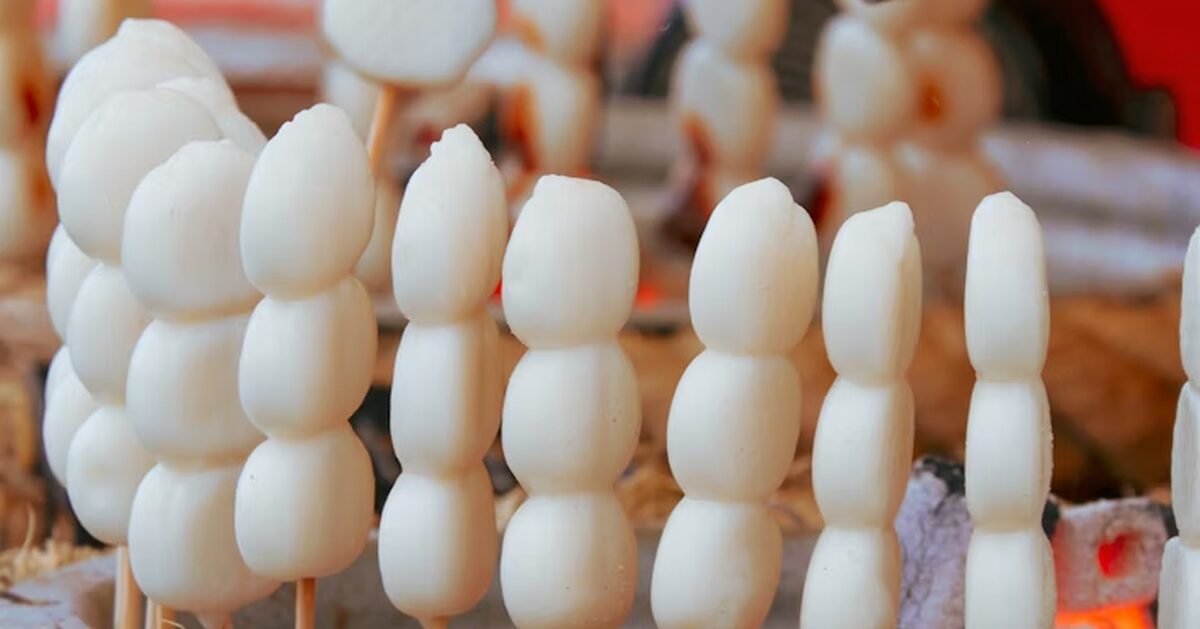
Dango are chewy rice dumplings served on a skewer, and they are one of Japan’s most traditional snacks. One of the most common versions is mitarashi dango, glazed with a sweet and savory soy-based sauce.
Dango is often sold in temple towns, old shopping streets, and sightseeing areas known for traditional sweets. It is less rich than fried street food, but it offers a more classic and cultural side of Japanese snacking.
The texture is chewy and pleasantly dense, which can feel quite different from Western desserts. For many travelers, that unique texture becomes part of the appeal.
Why try it:
It is portable, traditional, and closely tied to Japanese food culture.
Tip:
Mitarashi dango is usually the most approachable version for first-time visitors.
12. Yaki Tomorokoshi
At many summer festivals, you will find yaki tomorokoshi, or grilled corn on the cob brushed with soy sauce and lightly charred over the grill.
The combination of sweet corn and savory soy sauce is simple, but it works beautifully. The grilling adds a smoky flavor that many people immediately associate with Japanese summer festivals.
It may not be the most internationally famous item on this list, but it absolutely deserves a place among the best street foods in Japan because it captures the feeling of festival season so well.
Why try it:
It is a classic festival snack with a sweet-savory flavor that feels unmistakably Japanese.
Tip:
Keep napkins handy, since it can be a little messy to eat.
Where to Find the Best Street Food in Japan
You can find amazing street food in Japan in many settings, but these are some of the best places to start:
Festivals
Seasonal festivals are one of the best places to try classics like yakisoba, takoyaki, karaage, grilled corn, and other popular snacks.
Traditional Markets
Markets such as Nishiki Market in Kyoto and other local food streets often offer fresh snacks and regional specialties.
Temple and Shrine Approaches
The roads leading to famous temples and shrines often have stalls selling senbei, dango, taiyaki, and local sweets.
Shopping Arcades
Covered shopping streets in Japanese cities are great for casual takeaway snacks and quick food stops between sightseeing plans.
Yatai Stalls
In cities such as Fukuoka, traditional outdoor food stalls called yatai create a fun, local dining atmosphere.
Famous Food Districts
Areas such as Dotonbori in Osaka are known for lively food culture and easy access to popular Japanese street foods.
Japanese Street Food Etiquette Tips
Trying street food in Japan is easy, but a few etiquette points can make the experience smoother:
Eat near the stall when possible
In some places, eating while walking is discouraged. Many people buy their food, step to the side, and eat nearby before moving on.
Dispose of trash carefully
Public trash bins can be surprisingly limited in Japan. If the stall has a bin, use it there. Otherwise, you may need to carry your trash with you for a while.
Do not block busy walkways
Food markets and festival streets can get crowded. Move to the side before eating so you do not block other people.
Carry cash
Cashless payment is more common than before, but smaller stalls may still prefer cash.
Expect snack-sized portions
Many Japanese street foods are meant to be enjoyed as snacks rather than full meals, which is part of what makes trying several items so fun.
Tips for First-Time Visitors
- Start with easy favorites like karaage, yakitori, or yakisoba
- Try at least one regional specialty in each city you visit
- Balance savory snacks with sweets like taiyaki or dango
- Go slightly before peak hours if you want shorter lines
- Watch what locals do if you are unsure about ordering or eating etiquette
Trying Japanese street food is one of the easiest ways to make your trip feel more spontaneous and memorable. Sometimes the best travel moments are not the ones you plan in advance, but the ones that happen when you stop at a food stall because something smells too good to ignore.
Final Thoughts on the Best Street Foods in Japan
The best street foods in Japan are not only about flavor. They are also about atmosphere, discovery, and place. A skewer of yakitori on a lively street, a tray of takoyaki in Osaka, a warm taiyaki on a cool afternoon, or grilled corn at a summer festival can easily become one of the most memorable parts of your trip.
For first-time visitors, Japanese street food is an easy and rewarding way to experience local food culture beyond restaurants. It is affordable, varied, and full of regional personality. Some dishes are bold and savory, while others are sweet and nostalgic, but each one offers a small taste of everyday life in Japan.
If you are building your food bucket list, make sure these must-try foods in Japan are on it. You do not need a reservation, a big budget, or a formal dining plan. You just need curiosity and a healthy appetite.
So when you arrive in Japan, do not focus only on famous restaurants. Follow the smell of something grilling, see where people are lining up, and give yourself time to snack as you explore. Some of your favorite food memories may come from a small stall on a busy street rather than a sit-down meal.